Frequently Asked Questions
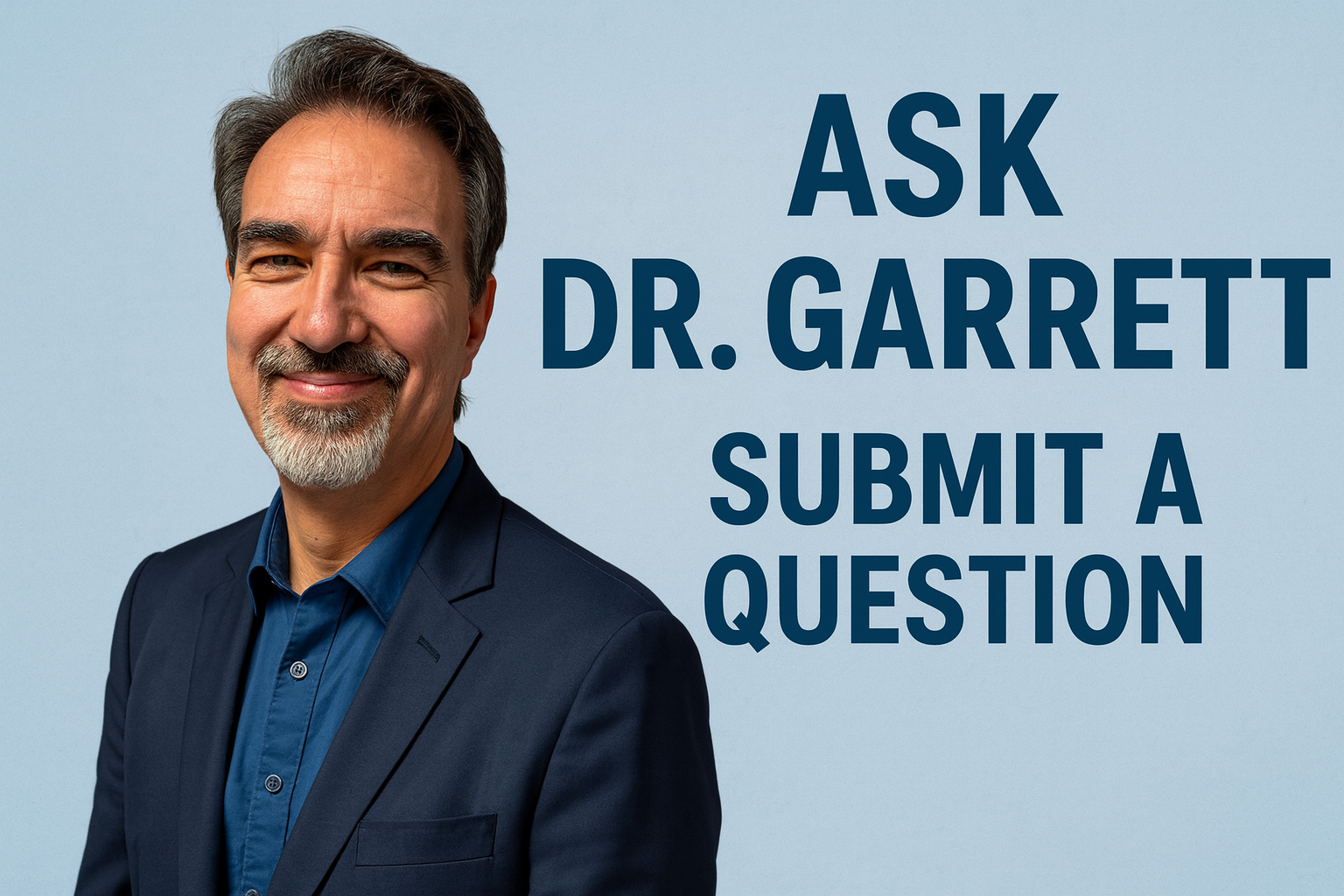
There are a lot of questions and misinformation about hearing loss and tinnitus out there. On this page, we have answered some of the most common questions we get about hearing loss, tinnitus and treatment options. Dr. Garrett will also answer any questions we receive, so click on the picture above to submit a question.
Recently Submitted Questions
Thanks for the question, Jennifer! The short answer is that noise masks speech and weakens the cues your brain needs to separate voices. Even mild hearing loss can make this much harder. You can read more about it here. Want to know how well you are able to pick out speech from noise? Take our speech in noise screener.
🎧 Speech-in-Noise Screener
Test your hearing in realistic listening conditions using Nu-6 validated monosyllabic words
📱 Mobile-Friendly Test
Works great on phones, tablets, and computers with any headphones or earbuds!
⚠️ Important Disclaimer
This is a screening tool only - NOT medical advice or diagnosis.
Results should not replace professional hearing evaluation.
Quick Setup
For Best Results:
- Any headphones or earbuds (wired or wireless both work)
- Reasonably quiet space (normal room noise is okay)
- 8-12 minutes of time
- Set device volume to 50-70% before starting
🔊 Volume Check
Please set your device volume to a comfortable level (50-70%) before starting the test.
Volume Calibration
We'll play a sample to help you set the right volume level.
The speech should be clearly audible but not too loud. Adjust your device volume if needed.
How It Works
You'll hear words spoken with background noise.
🔸 Listen carefully to each word
🔸 Type what you hear (spelling doesn't need to be perfect)
🔸 Background noise will gradually increase
🔸 We'll test both ears together - words and noise play in both ears
🔸 Make sure headphones are comfortable and properly positioned
🎧 Updated Test: This test now evaluates both ears together, which is faster and matches how you hear in real-world situations. You'll hear words and background noise in both ears simultaneously.
This simulates real-world listening challenges like restaurants, meetings, or busy environments.
Speech Recognition Test
Speech-in-Noise Hearing Screening Results
Nu-6 Validated Monosyllabic Word Test
Your Results
Patient Information:
Test Date:
Test Type: Speech-in-Noise Screening (Nu-6 Words)
Total Words Tested: 8 (both ears together)
Left Ear
Right Ear
Detailed Word-by-Word Results:
Detailed Results:
Clinical Interpretation:
Thanks for the question, Adam! Here's my answer I tell people all the time: If you have hearing loss in both ears, you really should have two hearing aids. Here's why:
- Your brain uses input from both ears to separate speech from noise.
- Localizing sounds—knowing where voices or dangers come from—requires two ears.
- Using just one is like buying one lens for your glasses. Technically it helps, but not the way your brain is designed to work.
Most patients who try “just one” end up upgrading to two because the difference in clarity and comfort is night and day.
Understanding Hearing Loss
Hearing loss happens when sound can’t travel efficiently from your outer ear to your brain. The most common causes are age-related changes, noise exposure, genetics, and certain medications. The key takeaway: hearing loss is not “normal,” even with age. It’s progressive—but treatable. 👉 Learn how hearing loss affects your brain.
That’s one of the most common signs of high-frequency hearing loss. Your brain hears vowels fine but misses consonants (like “s,” “t,” and “f”)—the sounds that give speech clarity. This makes noisy environments especially hard to follow. Take our self assessment below to see if you might need to schedule a hearing test.
Hearing Health Self-Assessment
Take this quick 10-question assessment to evaluate your hearing health.
Don’t wait. Every year of delay increases the risk of cognitive decline, tinnitus, and communication fatigue. Early treatment helps preserve brain connections responsible for hearing and comprehension. Click Here for 5 Signs Of Hearing Loss You Shouldn't Ignore.
Diagnosis & Treatment
Your first visit lasts about 90–120 minutes. We follow our proprietary B.E.S.T.™ Process:
- Background: Full medical and hearing history
- Exam: Comprehensive diagnostic testing
- Solution: Personalized treatment plan
- Treatment: Most patients begin treatment the same day
It means we treat hearing loss like the neurological condition it is—not just a problem with the ears. We focus on restoring the brain’s sound processing through advanced testing (speech-in-noise, cognitive screening, and Real Ear Measurements) and ongoing follow-up care.
Hearing Aids, Brands & Cost
Instead of paying thousands upfront, most patients choose our monthly treatment plan (between $169-$227/mo). You can read more on our Pricing Page, but in general, hearing treatment plans include:
- Comprehensive diagnostic hearing evaluation
- Best-in-class hearing technology selected for your unique needs
- Unlimited adjustments and fine-tuning
- Annual re-testing and ongoing care
- All supplies (domes, wax guards, batteries, etc.)
- Loss & damage coverage with no deductible
- 4th-year repair warranty
- Courtesy loaner devices when needed
- “Welcome Back to Hearing” adaptation program
- LACE.ai auditory training subscription
- 25% discount for immediate family members
- Price-lock guarantee- what you pay today will be the same price you pay going forward if you choose to continue with the plan
OTC hearing aids can help mild losses but lack professional testing and calibration. Many people actually have earwax buildup or asymmetrical loss that OTC devices can’t detect. We can test your hearing first and recommend whether OTC or prescription technology is better for you.
Yes. We work with most insurance plans and can check your benefits during your free consultation. If coverage falls short, our affordable plans ensure cost never stops you from getting the treatment you need. We can use whatever your insurance pays toward the cost of the treatment, lowering your monthly cost even more. See more about insurance coverage here.
We partner with all major hearing aid manufacturers, including Oticon, Phonak, ReSound, Widex, and Starkey — as well as several specialty lines used in tinnitus and cognitive-focused treatment plans.
Because every patient’s hearing loss is unique, our doctors don’t “sell” devices — we prescribe hearing technology as part of a personalized medical treatment plan. During your evaluation, we’ll measure how your brain processes speech, test your hearing in noise, and recommend the specific brand and model that fits your hearing goals, lifestyle, and budget. Want to know which one is best? You can request a copy of our special Best Hearing Aid Guide or watch below:
Brain Health Connections
Research shows untreated hearing loss can increase dementia risk by up to 500%. The good news: treating hearing loss is now recognized as the #1 modifiable factor to reduce cognitive decline risk.
Your brain uses sound cues to maintain balance. When hearing is impaired, you lose those cues, increasing fall risk by up to 140% for every 10 dB of untreated loss.
Tinnitus (Ringing In The Ears)
That’s tinnitus—a sign your brain is reacting to missing sound input from hearing damage. Think of it as your brain “turning up the volume” to fill in missing frequencies.
Yes. Despite what you may have been told, tinnitus can be managed and reduced. We combine hearing technology with My Tinnitus Therapy, a guided brain-retraining program that addresses both the cause and emotional effects (stress, anxiety, insomnia).
Our success rate: over 85% of patients report noticeable improvement or complete relief.
If the ringing, buzzing, or hissing in your ears lasts more than a few days, keeps you up at night, or makes it hard to concentrate, it’s time to see a hearing specialist.
Tinnitus isn’t “just something you have to live with.” It’s often a sign of underlying hearing damage or changes in how your brain processes sound — and the sooner you identify the cause, the better your chances of reducing or even eliminating the noise.
At Timpanogos Hearing & Tinnitus, we use advanced testing to find out what’s triggering your tinnitus and create a personalized plan to calm it down.
If you’re not sure whether your tinnitus needs attention yet, you can start by taking our quick, free Tinnitus Self-Assessment Tool below.
It only takes about two minutes and will help you understand whether your symptoms need a full evaluation.
Some patients notice relief immediately. For others, retraining the brain can take 6 weeks to 18 months. The key is consistency—our team guides you through every step. You can find this answer and more by watching our video about the Top 5 Questions we get about tinnitus video.
