A lot of people are surprised when I tell them not to buy hearing aids. But good hearing care isn’t about selling devices — it’s about understanding what’s really going on. Here are three real stories from my clinic here in Utah County that show exactly when waiting is the right move. Prefer to watch? Click below:
Table of Contents
- Medical Red Flags: When Technology Can Make Things Worse
- Unrealistic Expectations: When Hearing Aids Aren’t the First Step
- Motivation Matters: When the Patient Isn’t Ready Yet
- #h-conclusionConclusion
- FAQs
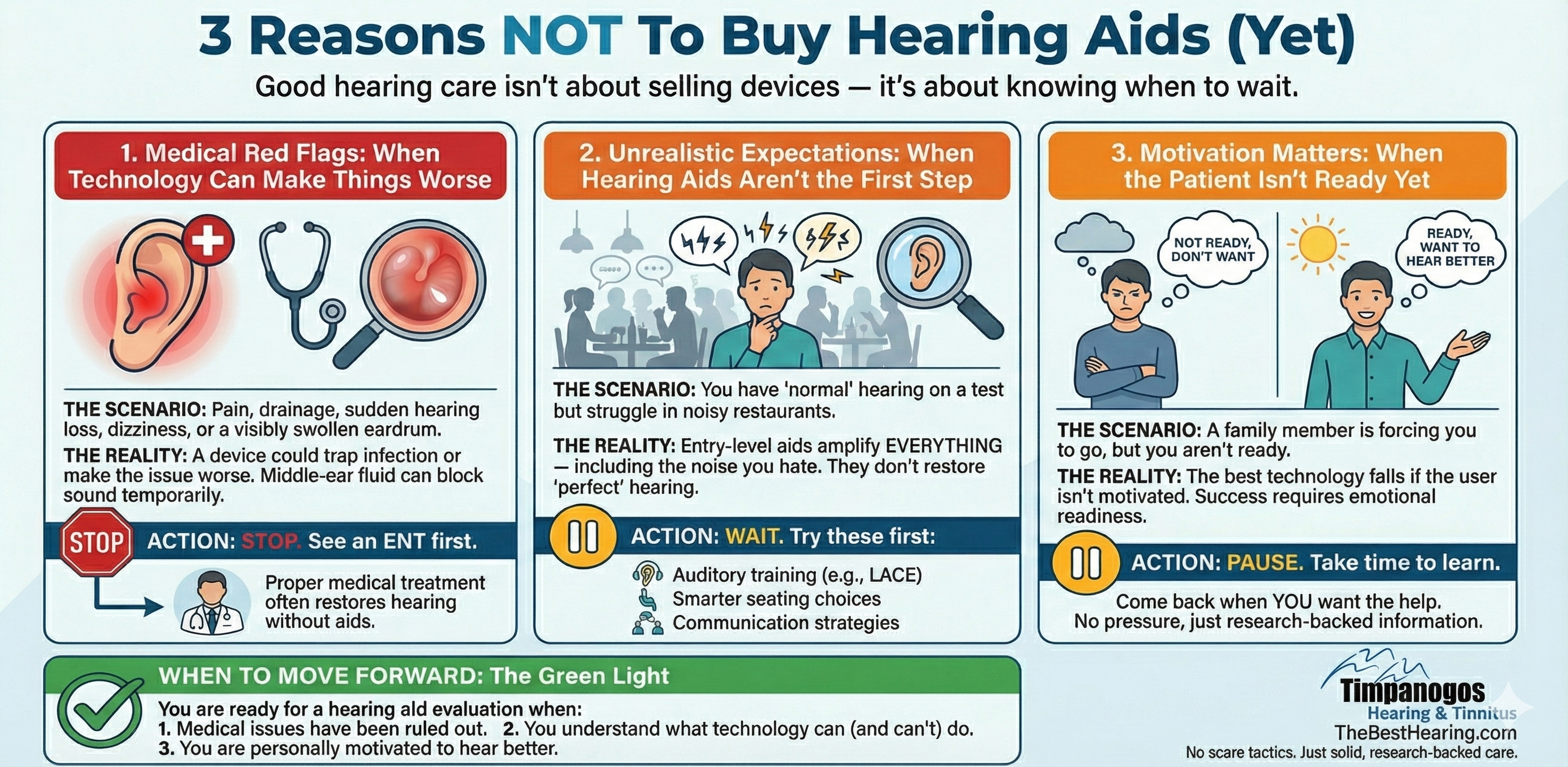
Medical Red Flags: When Technology Can Make Things Worse
Mark came in ready to buy hearing aids. His wife was even more ready. His hearing test showed a moderate loss — a textbook case.
But when I looked in his ear, I saw a bright red, swollen eardrum. That’s a medical problem, not a hearing-aid problem. A device in that ear would’ve trapped the infection and made things worse.
I told him, “You’re not buying hearing aids today.”
He saw an ENT, received treatment for middle-ear infection, and his hearing improved dramatically. The Recent research notes that middle-ear fluid can cause temporary hearing loss — and treating it properly restores hearing in many cases.
A good provider will always rule out medical issues before recommending technology.
Unrealistic Expectations: When Hearing Aids Aren’t the First Step
Susan, a sharp executive in her 50s, walked in with a folder full of research. Her trouble? Hearing speech in noisy restaurants.
She pointed to an inexpensive online device and said, “This is all I need, right?” When we tested Susan's hearing, we found that she had what is generally considered "normal" hearing, but was experiencing struggles processing speech in noisy places. For her, an entry level hearing aid would amplify everything — including the noise she wanted to avoid. As the NIH explains, hearing aids improve hearing, but they don’t restore normal hearing, especially in background noise.
Instead of selling her something that wouldn’t work, we decided to start with something different:
- communication strategies
- smarter seating choices
- auditory training (like LACE)
Three months later she came back smiling — doing better without hearing aids. Eventually she might need hearing devices, but we will make sure that her treatment plan includes devices that will help her in noise, not hurt.
Motivation Matters: When the Patient Isn’t Ready Yet
George came in because his daughter insisted. He sat with arms crossed and didn’t want help — even though his hearing test showed a severe loss.
The best technology in the world won’t help someone who isn’t ready.
I told them, “This won’t work unless you want it to.”
Eight months later, George called on his own. He walked in motivated, asked great questions, and became one of my most successful fittings.
Sometimes the timing — not the technology — is the real issue. If patients aren't ready emotionally for hearing aids, we are happy to provide whatever education they need to feel comfortable-- on their own terms without scare tactics or pressure. Just solid, research-backed information.
Conclusion
So, when shouldn’t you buy hearing aids?
- When there’s a medical issue that needs treatment first.
- When the device you’re considering can’t solve the problem you actually have.
- When you’re not ready — emotionally, practically, or personally.
Good hearing care starts with understanding, not sales.
If you’d like to learn more about tinnitus, hearing loss, or treatment options, visit our
Learning Center or browse our
free patient guides.
And if you’re in Utah and ready for a no-pressure evaluation, you can schedule anytime at:
https://utahhearingaids.com/request-your-free-consultation/
FAQs
Can an ear infection cause temporary hearing loss?
Yes. Fluid behind the eardrum can block sound and may resolve with proper medical treatment.
Are hearing aids always the right first step for hearing trouble?
Not always. Sometimes communication strategies or auditory training work better at first.
Do hearing aids fix hearing in noisy restaurants?
They help, but they don’t restore “perfect” hearing. Higher-level technology performs better in noise.
Should I buy hearing aids if I’m not sure I’ll wear them?
Not yet. Motivation is a major factor in hearing-aid success.
When should I see an ENT instead of an audiologist?
If you have pain, drainage, sudden hearing loss, dizziness, or a visibly abnormal eardrum, an ENT should evaluate you first.
